

Home Explore Animals & Wildlife Meerkat
MEERKAT
Suricata suricata
Mi Casa es su Casa
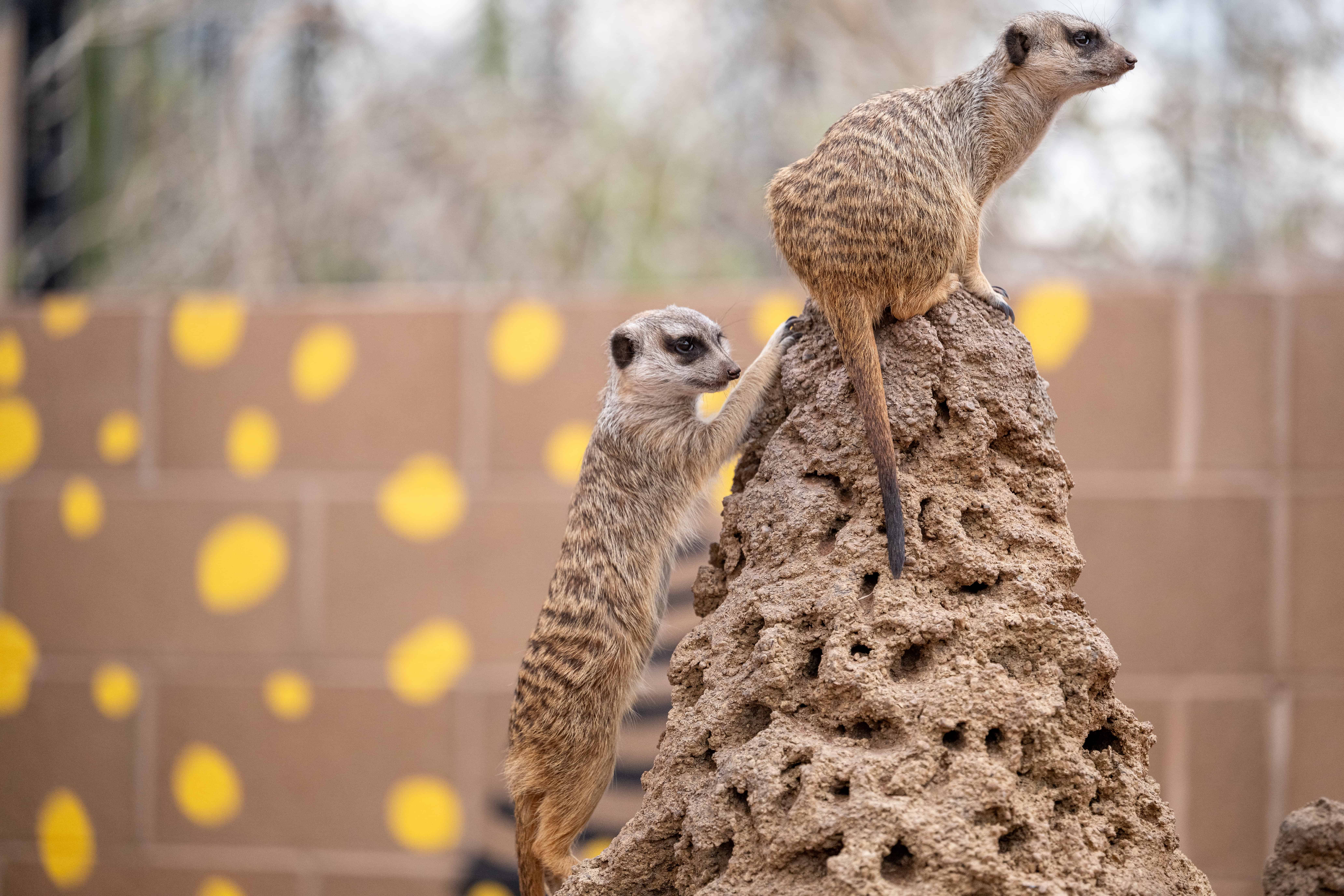
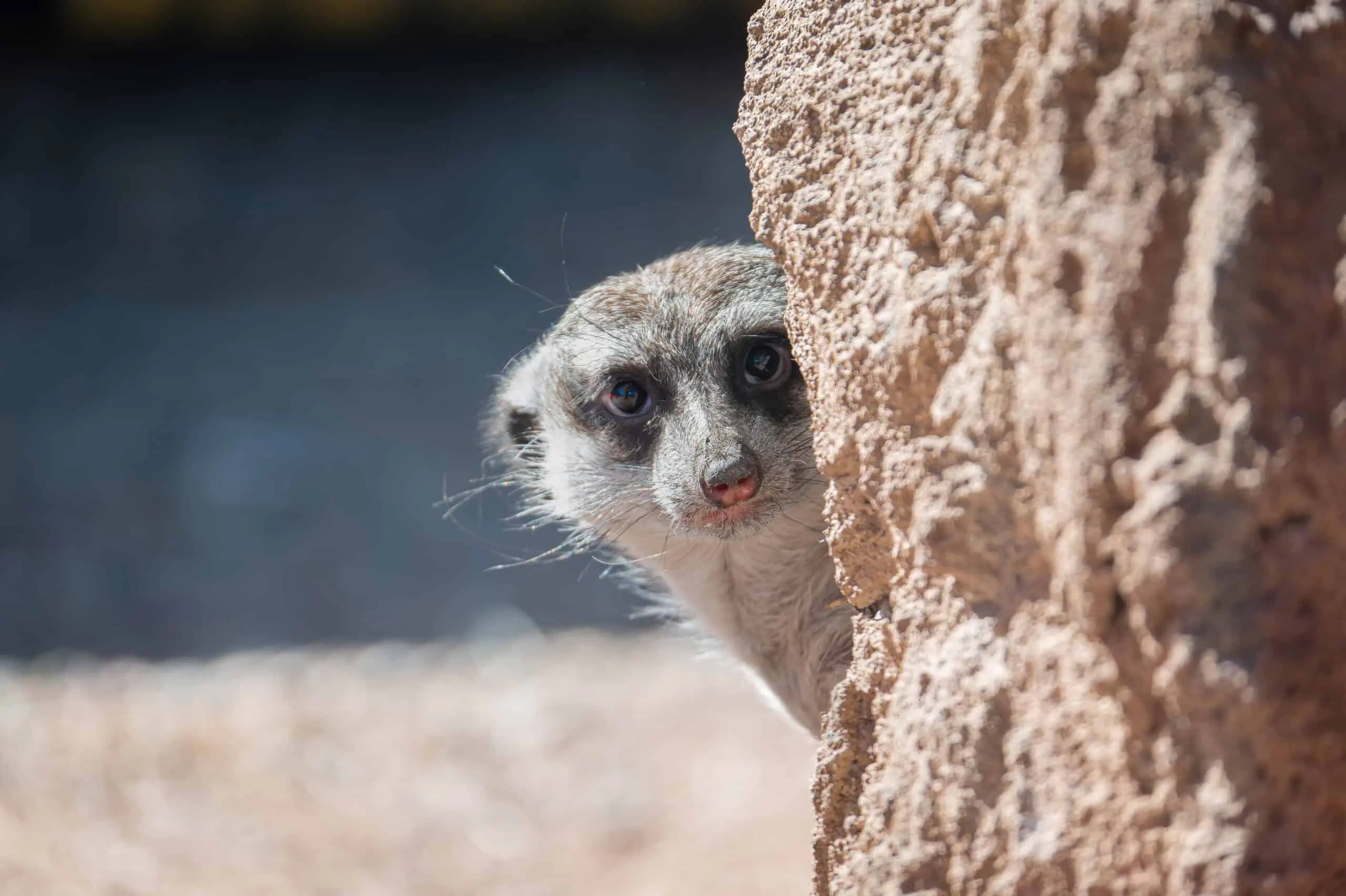
Meerkat families form large groups called mobs that typically range between 10 to 50 individuals. Mobs may consist of several families, including meerkats accepted from outside the mob. Although a dominant pair produces most of the offspring, these outsiders can help create genetic diversity within the mob. The entire mob, including aunts, uncles, brothers, sisters and even the outsiders help provide childcare and safety for one another. Meerkats have even been seen sharing their burrows with yellow mongooses and Cape ground squirrels.
Walk the Walk and Talk the Talk
Meerkats can travel long distances within their home territories, foraging for up to eight hours a day for food. Territories can span up to four square miles or more, often sending the meerkats far from their home burrow. Being away from home comes with risks, including airborne predators like falcons and eagles, and terrestrial adversaries like jackals. Foraging away from the home burrow naturally reduces overhunting and increases access to a wide variety of prey.
When foraging, meerkats can use over 30 different vocalizations. Threatening growls and spits are used to ward off potential threats or rivals. Murmurs are soft sounds that let nearby meerkats know that everything is safe. Clucks are for scolding, and defensive alarm barks help individuals know danger is close and to dive for cover.
Tools of the Burrowing Trade
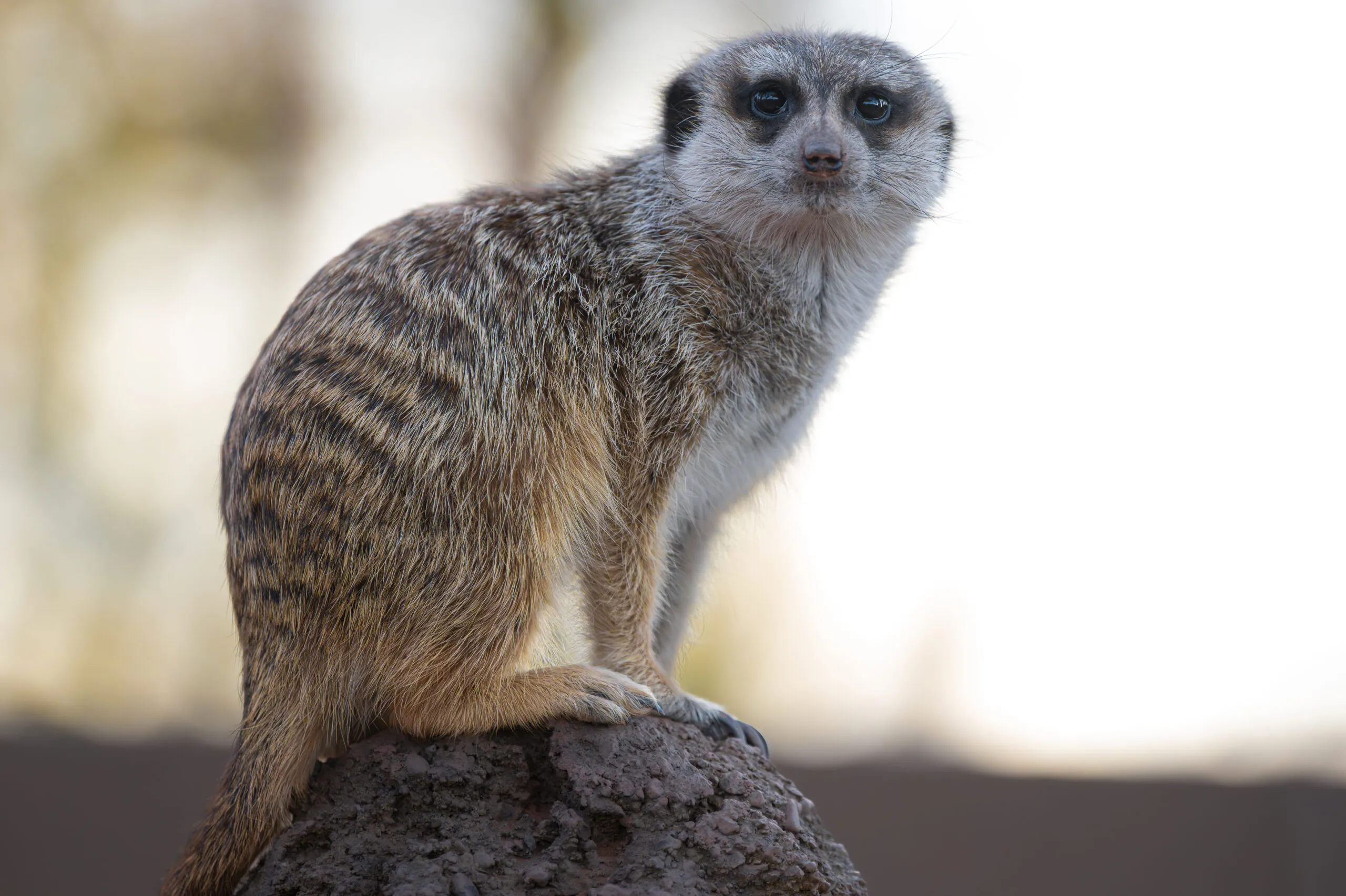
To live the underground life, meerkats use their many adaptations to get the job done. Digging as deep as 6.5 feet, they use their elongated, nonretractable claws to excavate tunnels and chambers within their burrow systems. With so much dirt moving around, meerkats need eye and ear protection. As such, they have a third eyelid, called a nictitating membrane, that acts like a pair of safety goggles. This clear membrane moves back and forth across the surface of the eye to help protect against debris. Meerkats are also capable of closing their ears to keep out dirt, much like a pair of protective earplugs.

Diet: invertebrates, small animals, roots, melons, tubers
Zoo Diet: formulated feed, veggies, fruit, greens, mealworms, crickets, specialized carnivore diet
Habitat: savannas, grasslands, deserts
Length: 10 – 14 in

Plan your visit today!
The Phoenix Zoo is one of the largest non-profit zoos in the U.S., caring for over 3,000 animals, with nearly 400 species represented, including many threatened/endangered species.
Plan your visit today!
The Phoenix Zoo is one of the largest non-profit zoos in the U.S., caring for over 3,000 animals, with nearly 400 species represented, including many threatened/endangered species.