

native species conservation

Arizona is home to a wide diversity of habitats and species, some of which are under threat. Working with our conservation partners, the Phoenix Zoo looks for opportunities to use our unique skills and experience to help them. Phoenix Zoo conservation scientists raise and breed species at the Zoo’s Arthur L. and Elaine V. Johnson Conservation Center for release to the wild and/or to help understand their biology and reproduction. We also conduct research and participate in field work as part of broader recovery efforts with our partners.

Learn more about the Zoo’s native species conservation projects below.

BLACK-footed ferret

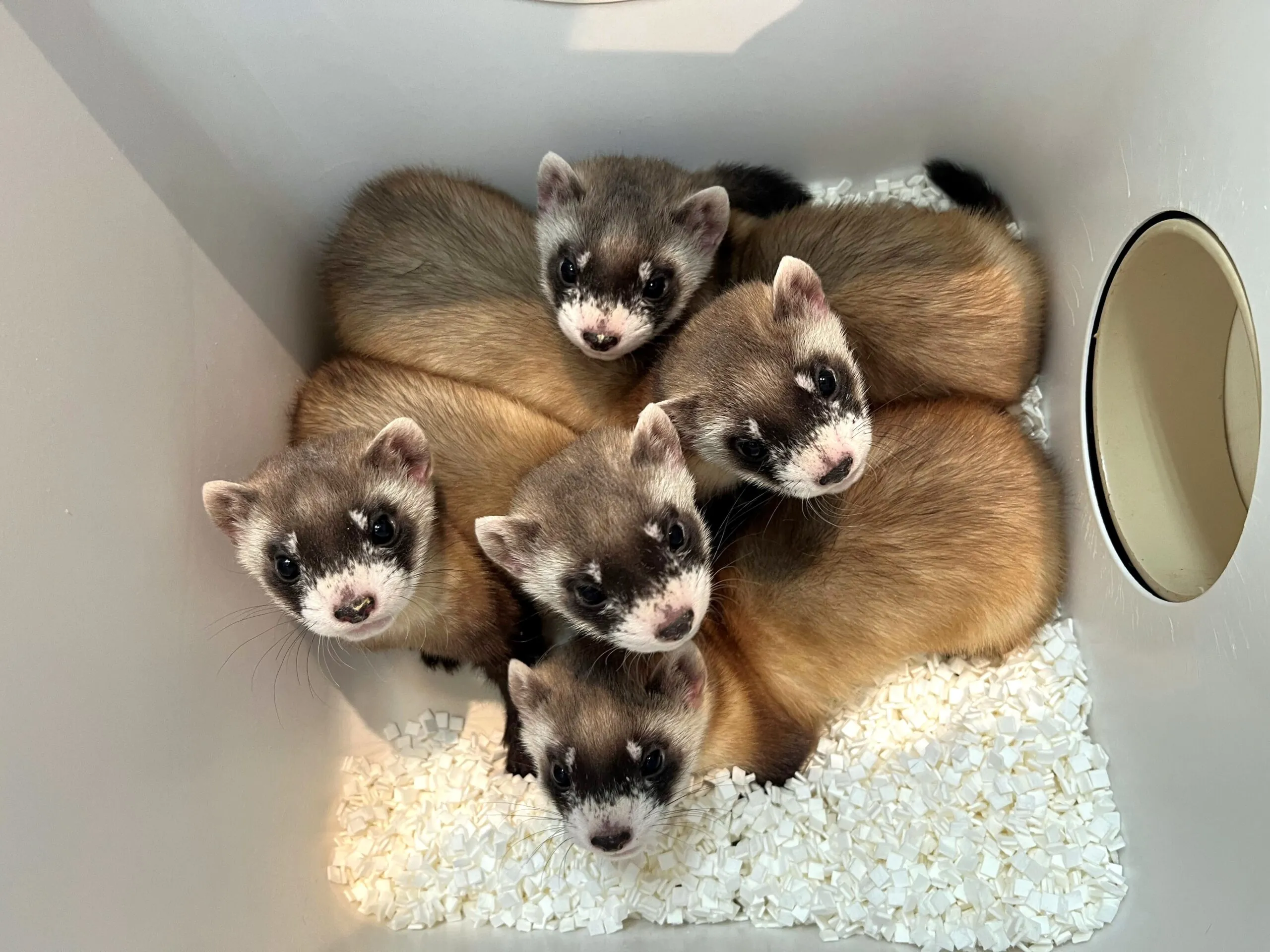
The black-footed ferret is a small carnivore considered one of the most endangered in North America. In fact, it was thought to be extinct twice. A small relict population was discovered near Meeteetse, Wyoming in 1981 and there began the amazing story of bringing a native species back from near extinction — first into a managed breeding program and now back in the wild. Black-footed ferrets are in the wild in more than a dozen release sites in North America.
Learn More

Chiricahua Leopard Frog

Chiricahua leopard frogs are native to higher-elevation areas of Arizona, New Mexico and northern Mexico. They are listed as Threatened under the U.S. Endangered Species Act. Disease – especially from chytrid fungus – is a major threat to these frogs. Invasive non-native species such as bullfrogs have also caused population declines, along with habitat loss and drought.
Learn More

desert pupfish

Listed as Endangered under the US Endangered Species Act, the desert pupfish has lost much of its habitat due to changes people have made to streams and rivers, as well as groundwater pumping and real estate development. The introduction of non-native fish predators and competitors has also driven pupfish declines, along with pesticides that have drifted into pupfish habitat from nearby agricultural areas.
Learn More

Narrow-headed Gartersnake

Narrow-headed gartersnakes are found in central Arizona east into western New Mexico, typically at elevations of 2,000-8,000 feet along rocky creeks and streams. The species is listed as Threatened under the US Endangered Species Act. Population numbers have declined significantly across the snake’s range. Habitat loss and degradation, non-native introduced species and climate change are all threats to narrow-headed gartersnakes.
Learn More

Huachuca Water Umbel

As an important form of erosion control, Huachuca water umbel stabilizes the banks of waterways, creating good habitat for many wildlife species. Listed as Endangered under the Endangered Species Act in 1997, the Huachuca water umbel is threatened by habitat degradation in the forms of groundwater pumping and human development. Additionally, increased erosion as a result of overgrazing livestock increases the severity of flash floods, which can wipe out umbel from an area.
Learn More

springsnail

At the Phoenix Zoo, we currently work with three species of springsnails. Found at only one site in Arizona and two in Sonora, Mexico, the San Bernardino springsnail is considered Threatened in the US and Endangered globally. The Huachuca springsnail, which inhabits roughly a couple dozen isolated springs in Arizona and Sonora, Mexico, is considered a “Species of Greatest Conservation Need” in Arizona and Near Threatened globally. The Quitobaquito tryonia is only found in a small area of Organ Pipe Cactus National Monument in Arizona and has been proposed to be listed as Endangered.
Learn More

Mount GrahAM rED sQUIRREL

The Mt. Graham red squirrel (Tamiasciurus fremonti grahamensis) is a subspecies that is only found on Mt. Graham in southeastern Arizona. It was actually thought to be extinct in the 1950s until it was rediscovered two decades later. On June 3, 1987, the Mt. Graham red squirrel was listed as endangered under the Endangered Species Act.
Learn More

Gila topminnow

The Gila topminnow (Poeciliopsis occidentalis), is a small fish approximately two inches in length. It is found in Arizona, New Mexico and parts of Southern Mexico. The Gila topminnow prefers shallow, quiet waters with dense algae and plant material. At one time this fish was considered to be the most common and abundant fish in the Gila River Basin; however, due to non-native fish competition, water draws and habitat destruction, Gila topminnow numbers dwindled until it was listed as endangered in 1967.
Learn More

Plan your visit today!

The Phoenix Zoo is one of the largest non-profit zoos in the U.S., caring for over 3,000 animals, with nearly 400 species represented, including many threatened/endangered species.

Plan your visit today!

The Phoenix Zoo is one of the largest non-profit zoos in the U.S., caring for over 3,000 animals, with nearly 400 species represented, including many threatened/endangered species.