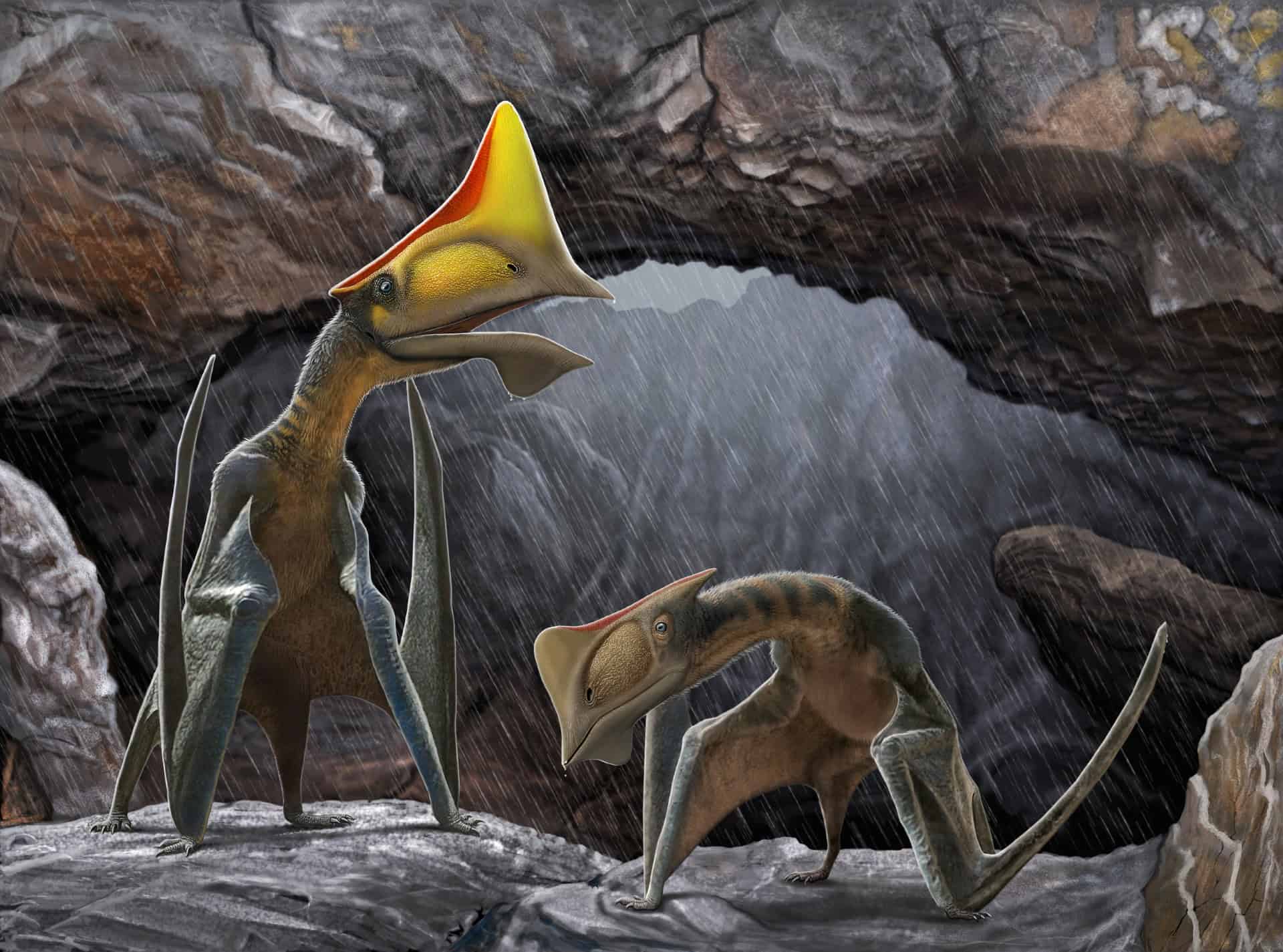
Tapejara
Pronunciation: TAP-uh-HAH-ruh
Tapejara wellnhoferi
"Wellnhofer's old being"
Unlike most pterosaurs (flying reptiles), Tapejara is thought by paleontologists to have primarily eaten plants, rather than meat. Much like modern toucans and hornbills, its toothless, downward-curving beak was adapted for crushing seeds, nuts and tough fruits.
Also like toucans and hornbills, they were likely opportunistic feeders, eating small animals and possibly scavenging carrion when the opportunity presented itself.
Where found: Brazil
Geologic time frame: Early to Mid-Cretaceous, 127 – 112 million years ago
Diet: herbivore, possible omnivore
Habitat: oceans, coastal areas, lagoons, forests
Wingspan: 4 – 5 ft
Plan your visit today!
The Phoenix Zoo is one of the largest non-profit zoos in the U.S., caring for over 3,000 animals, with nearly 400 species represented, including many threatened/endangered species.
Plan your visit today!
The Phoenix Zoo is one of the largest non-profit zoos in the U.S., caring for over 3,000 animals, with nearly 400 species represented, including many threatened/endangered species.