


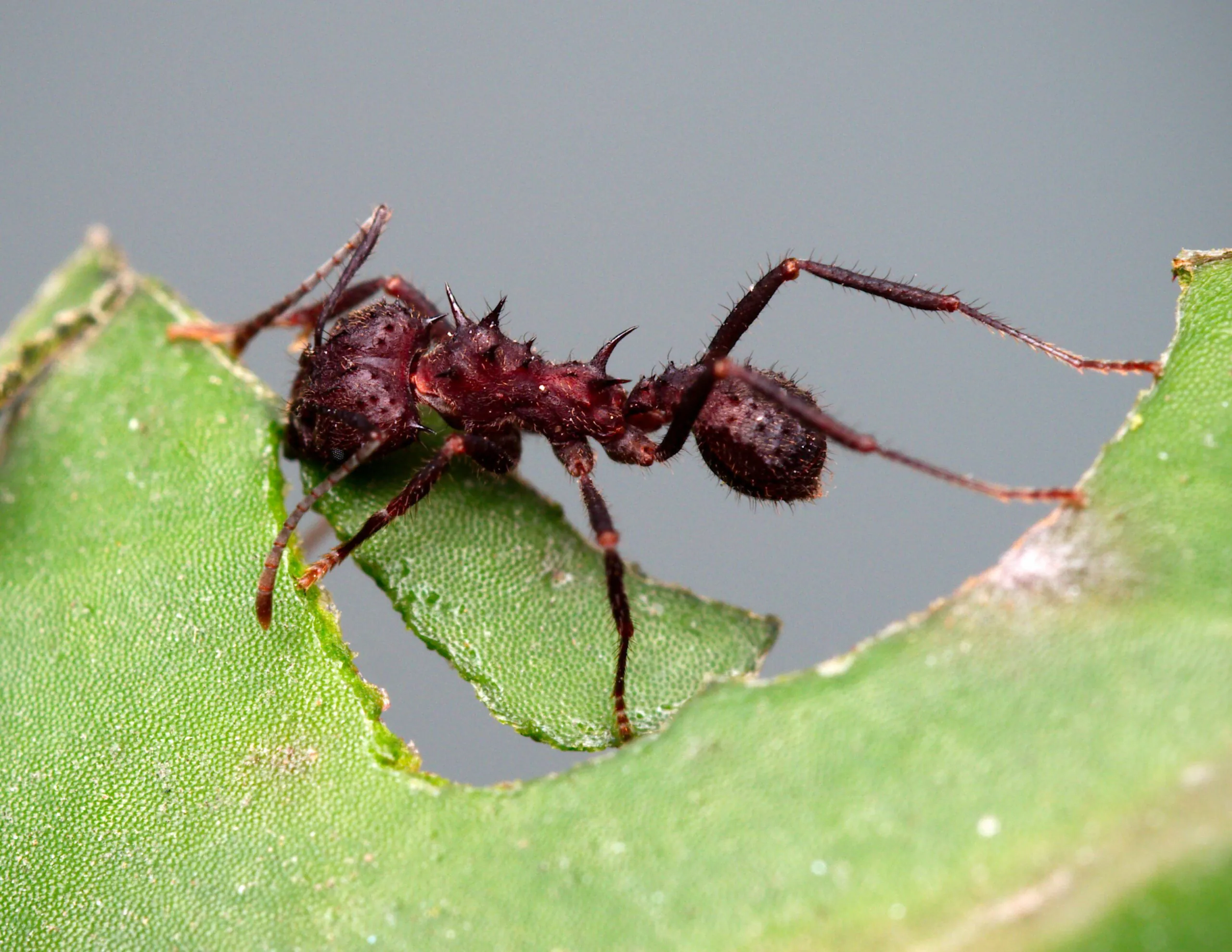
Leafcutter Ant
Atta sp.
Fungus Farmers
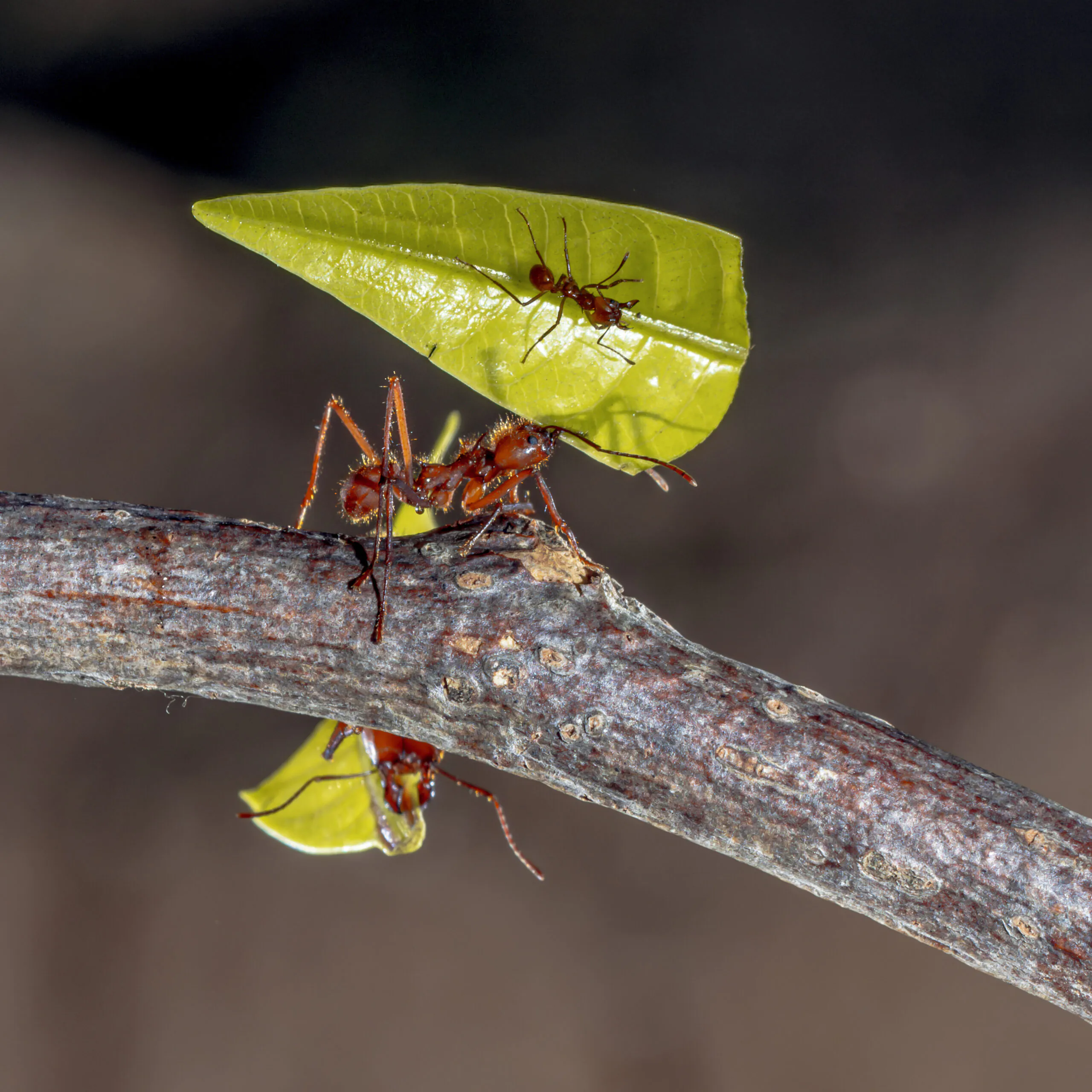
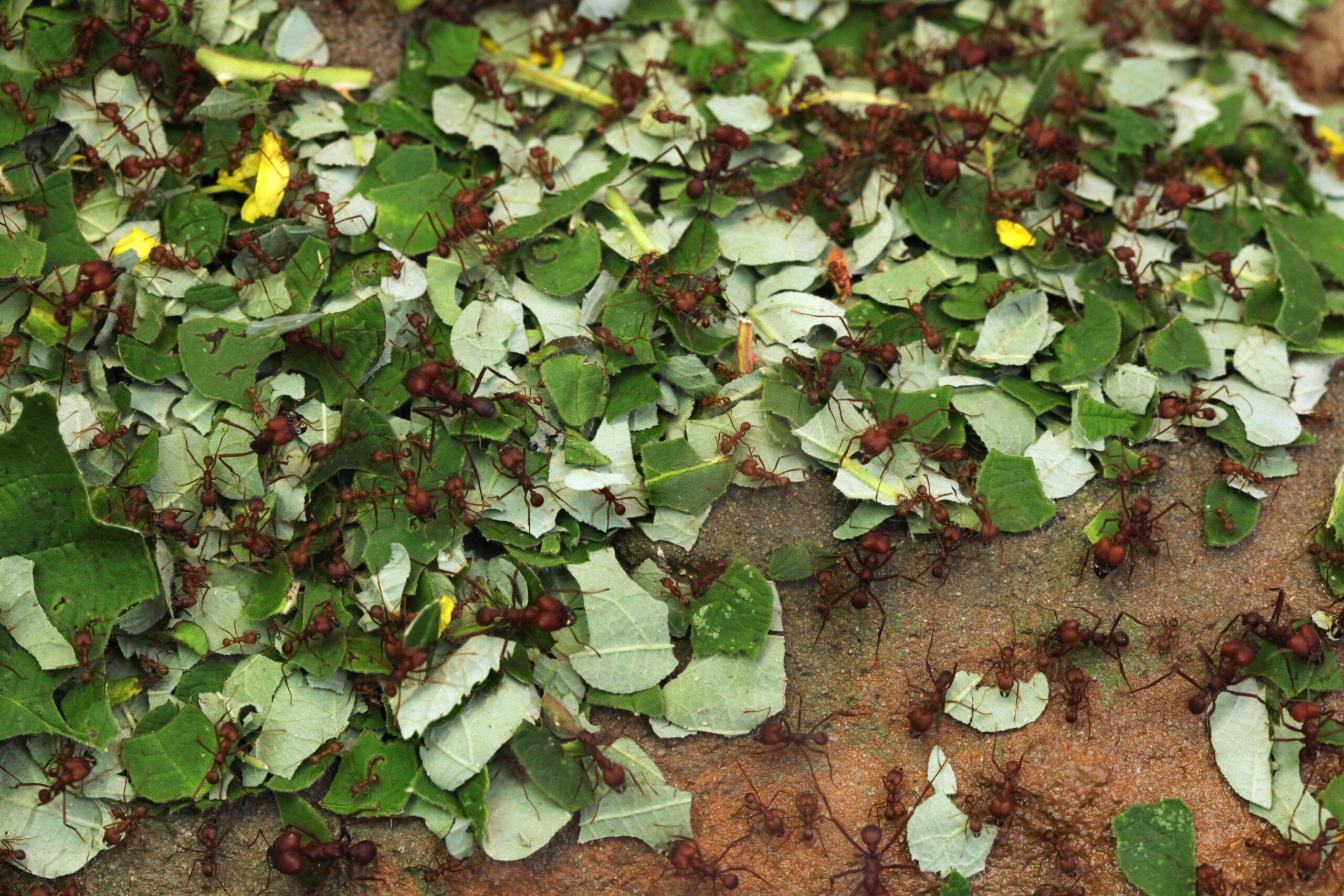
Leafcutter ants cut leaves, but they don’t eat them. Instead, they use them as compost for their fungus farms. 50 million years ago, long before human agriculture, leafcutter ants began cultivating the fungus Leucoagaricus gongylophorus. Today, you won’t find the fungus growing freely in the wild, as it relies entirely on constant care from the ants to survive.
Care includes regular weeding and the application of antibiotic secretions that protect it from other fungus species. In addition, the underground chambers where the fungus is grown are meticulously maintained for optimal humidity, moisture and airflow. In return, the fungus produces high-protein nodules called gongylidia, which are packed with vital nutrients for the ants to consume.
Labor Force
Eusociality is a system where animals live in large groups divided into two main categories: breeders and non-breeders. Acting as “superorganisms,” they function as a single unit. Many insects, like leafcutter ants, use this system. In eusocial societies, if you’re not the queen or a breeding male, you’re a worker.
Male leafcutter ants hatch once a year. After breeding, they fall to the ground and die. All other leafcutter ants are female workers. Some have different fathers, but they all have the same mother, the queen. Leafcutter ant workers are divided into physical castes, with bodies suited to their roles. Minims, minors, media and majors make up a complex workforce that harvests the leaves, tends to the queen and the fungus gardens, maintains the nest and protects it from predators and rivals.
Ant Athletics
Leafcutter ants are adapted to perform incredible athletic feats when harvesting leaves. When cutting, their specialized mandibles vibrate at a rate of 1,000 times per second. The rapid vibration causes the leaf to stiffen, making it easier for the ant to cut cleanly. A single worker can cut and haul a leaf fragment many times its own weight, sometimes travelling over several hundred feet back to the nest in less than an hour. Working together, a single colony can defoliate a large tree in less than 24 hours.

Diet: fungus
Zoo Diet: fungus (the fungus is fed a compost of mixed produce)
Habitat: grasslands, deserts, forests
Weight: .00002 – .05 oz
Plan your visit today!
The Phoenix Zoo is one of the largest non-profit zoos in the U.S., caring for over 3,000 animals, with nearly 400 species represented, including many threatened/endangered species.

Plan your visit today!
The Phoenix Zoo is one of the largest non-profit zoos in the U.S., caring for over 3,000 animals, with nearly 400 species represented, including many threatened/endangered species.