

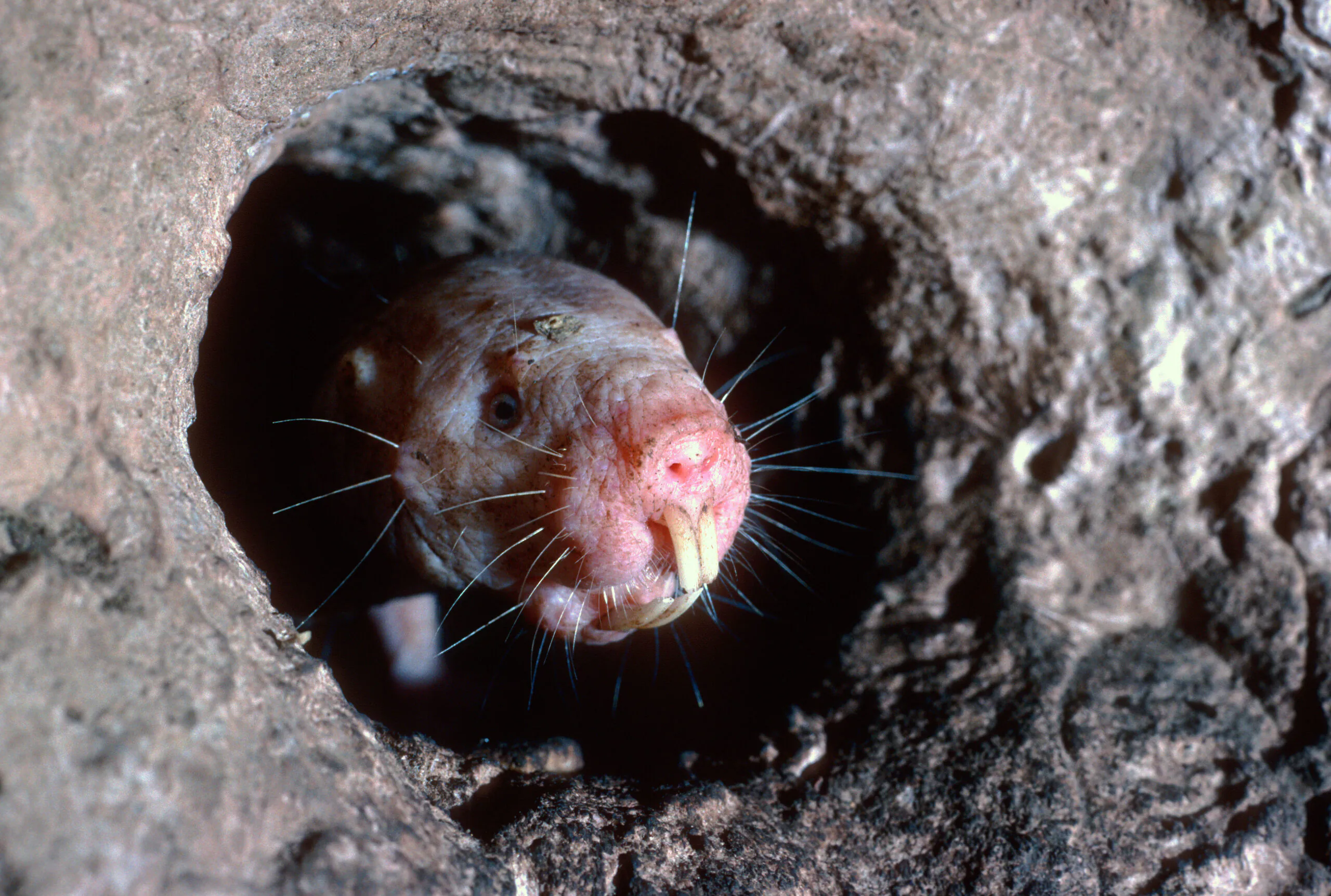
Naked Mole-Rat
Heterocephalus glaber
Underground Voices
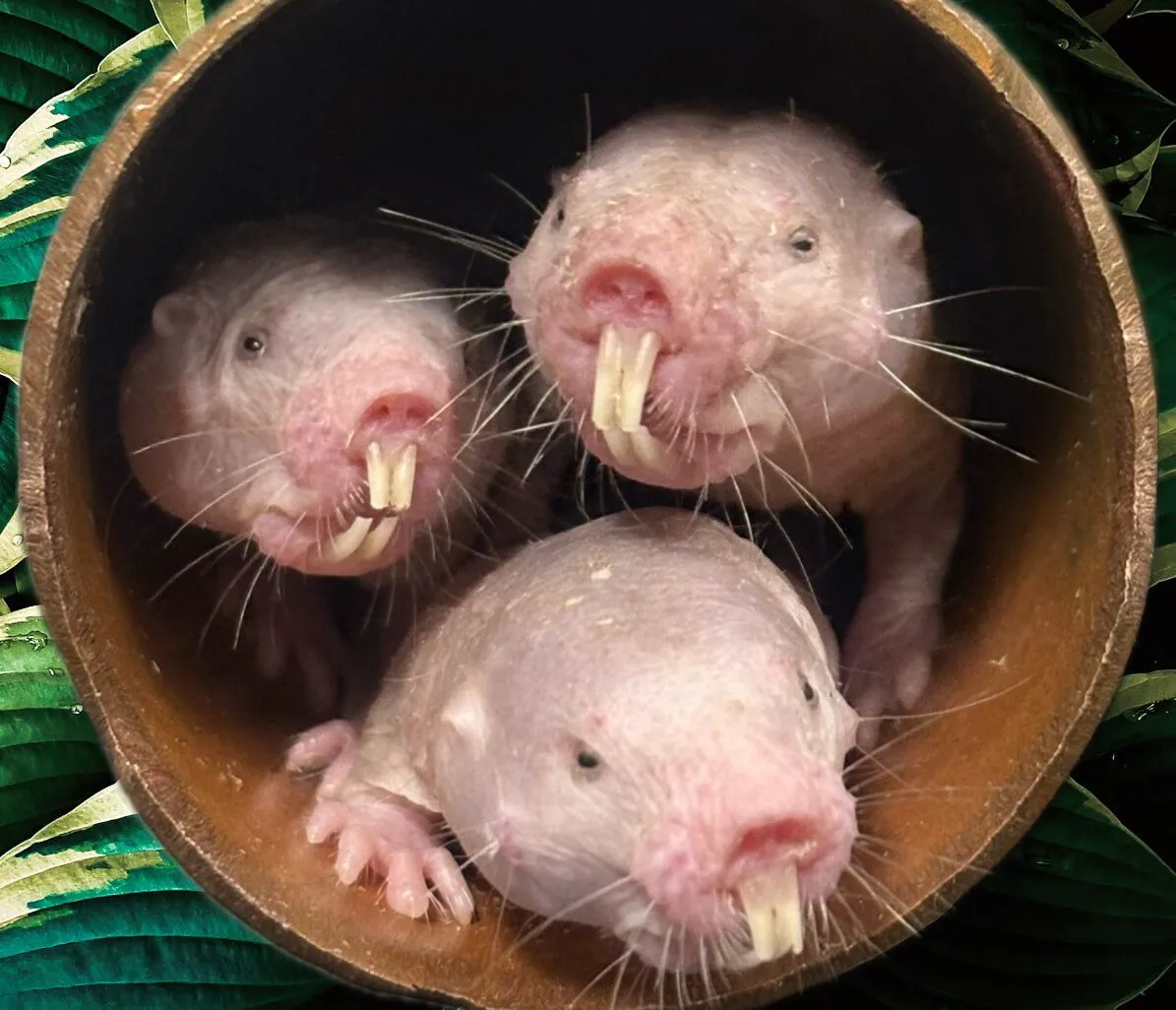
Scientists have identified over 25 different vocalizations used by naked mole-rats to communicate, the most common being a soft chirp when greeting. Research shows that each colony has its own accent or dialect. These dialects help them distinguish between family members and outsiders. The dialects are heavily influenced by the reigning queen, and if she dies, individual vocalizations can vary and lose their shared structure. When a new queen emerges, the colony members begin aligning their voices again in a new dialect.
All in the Family
Naked mole-rats and their cousins, the Damaraland mole-rats, are the only known eusocial mammal species. Eusociality is a social system found in certain insect species. It divides all colony members into breeders and non-breeders. In naked mole-rats, the queen bears all young and mates with one to three chosen males. Other colony members care for the young, forage for food and maintain and protect the burrow systems where they live.
Large and In Charge
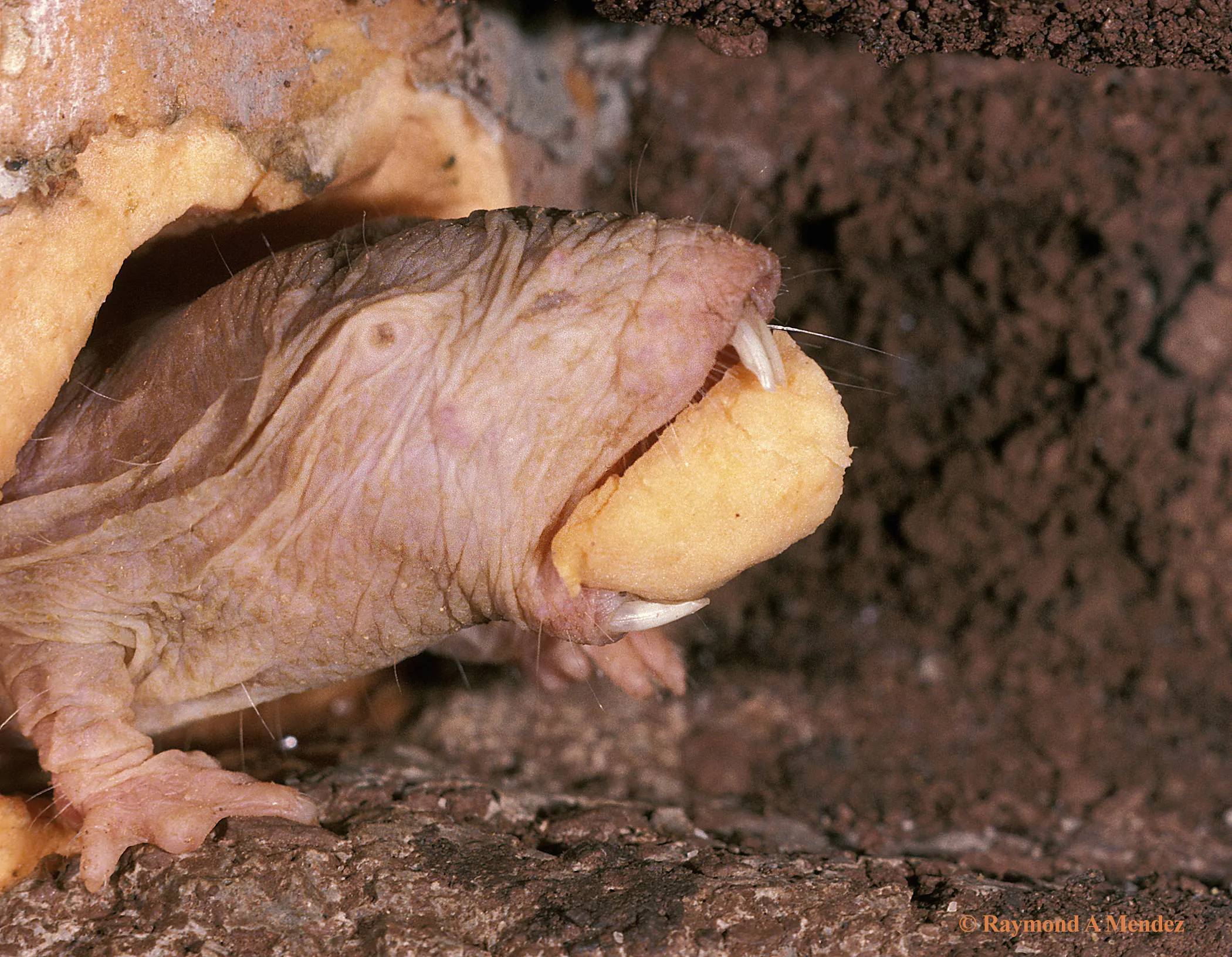
The naked mole-rat queen is the undisputed ruler of the colony. The largest member, she maintains control of others by physically pushing them around and by releasing a scent that alters the hormone levels of other females to keep them from breeding. Colony members eat poop to boost nutrient intake and gut health. When they eat the queen’s poop, her pregnancy hormones trigger a parental instinct that compels them to care for her pups. Her inner circle gets the best access to her fresh poop, and those lower on the social scale are more likely to get their poop chemicals second-hand from other mole-rats.
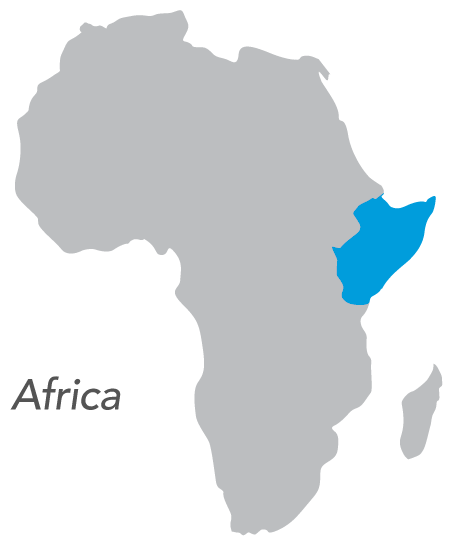
Diet: tubers, roots, bulbs
Zoo Diet: mixed produce, specialized protein cereal
Habitat: scrublands, deserts
Length: 3 – 13 in
Plan your visit today!
The Phoenix Zoo is one of the largest non-profit zoos in the U.S., caring for over 3,000 animals, with nearly 400 species represented, including many threatened/endangered species.
Plan your visit today!
The Phoenix Zoo is one of the largest non-profit zoos in the U.S., caring for over 3,000 animals, with nearly 400 species represented, including many threatened/endangered species.