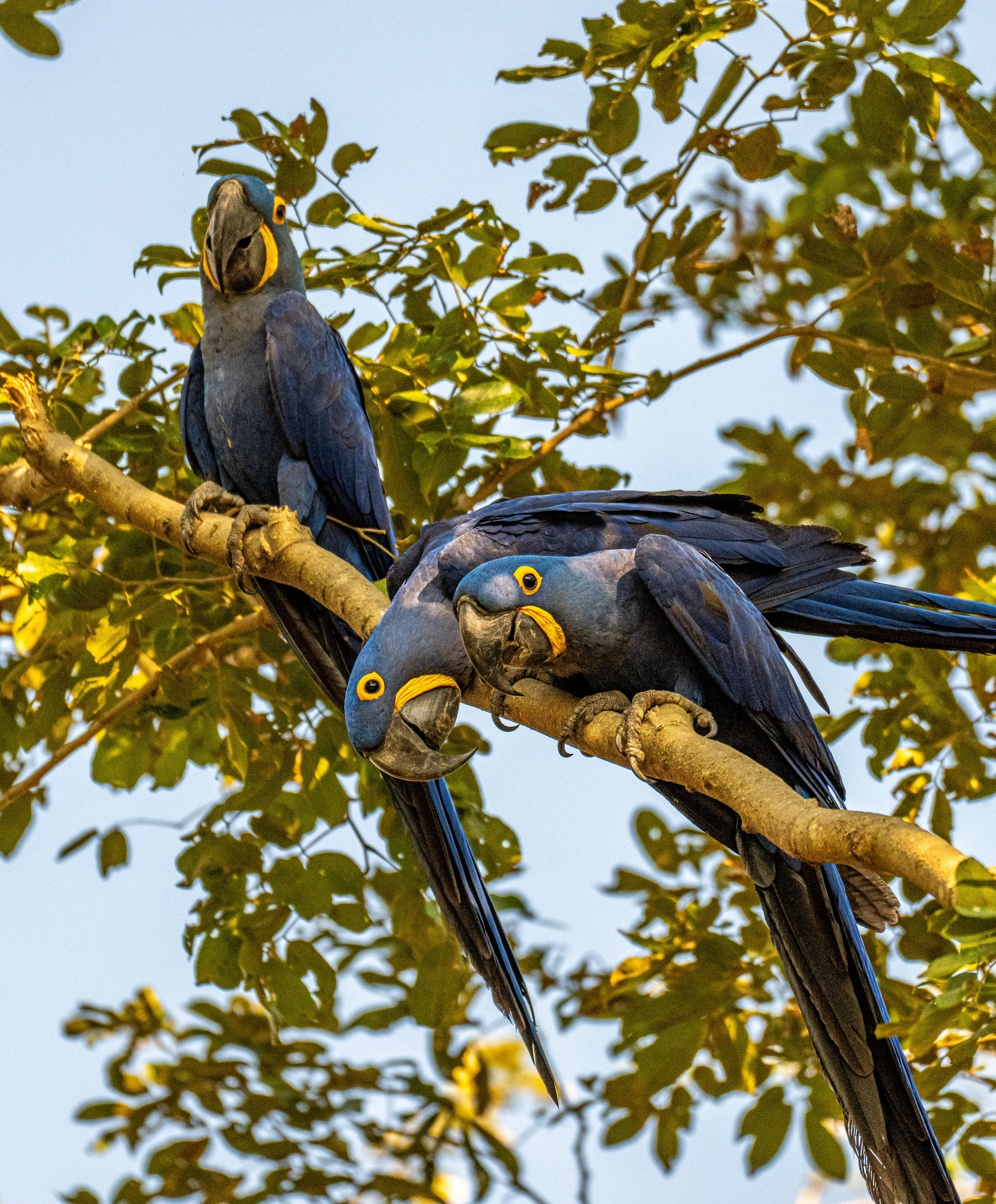
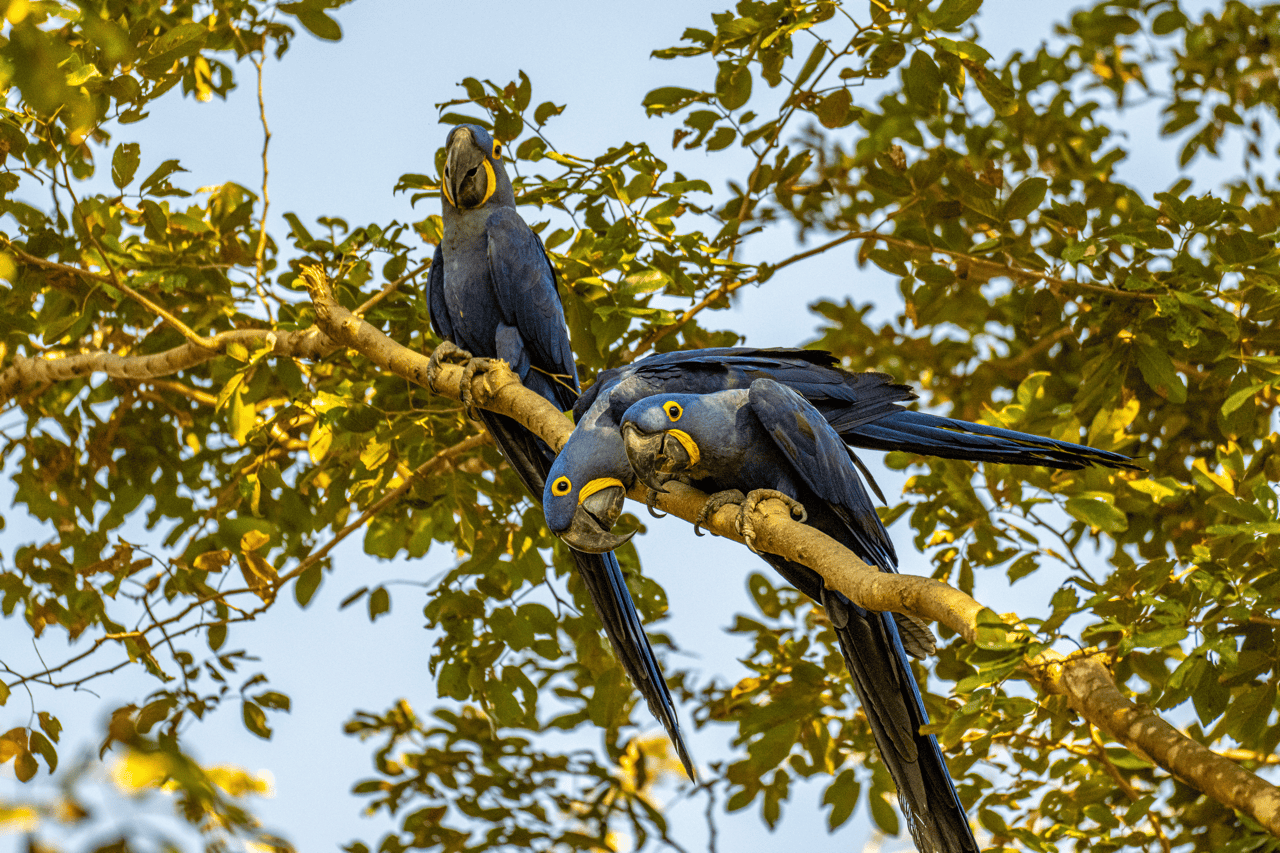
As the world’s largest parrot species, the hyacinth macaw’s vibrant cobalt-blue plumage and bright yellow markings are instantly recognizable. Beyond their striking appearance, their endearing personalities have made them a favorite among bird lovers.
These parrots famously mate for life, establishing devoted, lifelong bonds that endure for decades. Between their vibrant coloring and strong social bonds, the hyacinth macaw is highly prized by exotic pet owners across the globe.
But there is a dark side of this affection. Traffickers have historically looked for wild hyacinth macaw eggs to smuggle out of South America and fraudulently sell them as legal birds. Estimates suggest that around 10,000 hyacinth macaws were illegally captured and sold on the international illegal exotic pet market during the 1980s.
Due to this illegal trafficking, the wild hyacinth macaw population decreased to only 3,000 wild birds between 1970 and 1990. Great efforts have been taken to reduce trafficking of this species, and these efforts among other conservation projects are estimated to have helped double the wild hyacinth macaw population. However, this species also faces significant threats from habitat loss.
The tropical wetlands of the Bolivian Pantanal region have endured numerous fires in recent years, increasing the already-critical problem of deforestation. This has led to the destruction of essential nesting habitats for hyacinth macaws. With fewer hollows to nest in, macaw pairs have reduced breeding opportunities, creating concerns for wild populations.
Phoenix Zoo Employees Take Flight for the Hyacinth Macaw
To help protect the future of the hyacinth macaw species, two Phoenix Zoo employees, Joaquin Hidalgo and Becky Mansel, traveled to Bolivia to assist our conservation partners with vital fieldwork aimed at protecting the hyacinth macaw.
Joaquin and Becky worked with Conservación Loros Bolivianos and World Parrot Trust, as well as park rangers from the San Matías Integrated Management Natural Area, to restore lost hyacinth macaw nesting space, as part of a project the Phoenix Zoo has been funding over the past three years with its Conservation and Science Grant Program.
The team navigated tough terrain to hoist heavy, specialized nest boxes high into selected host trees. The crew successfully installed six brand-new nest boxes near the small town of Santo Corazón, immediately expanding the available breeding sites for local macaw pairs in the area.
“At the Montaro site, we saw 50-70 macaws up in the trees. Up until then, we’d only seen four to six a time. To see so many in one place was incredible. Their calls surrounded us and the longer we looked at a tree, the more birds seemed to appear.” — Becky, Ambassador Animal Keeper
From Santo Corazón, the crew pushed forward to San Fernando. There, they immediately set up a woodworking space to begin constructing additional nest boxes from scratch, preparing a whole new set of artificial homes for future installations across the region.
While in Bolivia, Joaquin and Becky also turned their attention to another vital aspect of wildlife protection: community outreach. The Phoenix Zoo team learned from those who live side-by-side with macaws and joined our conservation partners in community discussions about how to maintain a healthy and viable habitat for these vibrant birds. By engaging directly with those who share their home with the macaws, the team helped foster a deeper local appreciation for the birds and reinforced the work being done to protect the species.
“Seeing a chick in a nest box was huge. But seeing how involved and just as happy the farmers who live there were was amazing. Everyone’s eagerness to help with the mission and make us feel at home made things easier for us, and in many cases, made us feel at home.” — Joaquin, Marketing and Communications Specialist
A Beautiful Sight
The trip also included a visit to nest boxes that were previously installed by conservation partners. When they arrived at those sites, the Phoenix Zoo team saw an incredible milestone: the first hyacinth macaw chicks in Bolivia to hatch in an artificial nest box.
“The moment that made it all worthwhile was seeing a hyacinth macaw baby in the nest box. It was an amazing experience to see the species successfully reproducing, and to know there are more macaws in the world due to this work.”— Becky, Ambassador Animal Keeper
“After two weeks, we got to our final nest site in Candelaria. Seeing a little pink baby bird and another egg in a nest box made all the work feel worth it. It was solid proof that the project works, and that the other boxes we put up could also be future nests for so many macaws.” — Joaquin, Marketing and Communications Specialist
You Can Make Future Conservation Efforts Possible
The hyacinth macaw conservation work that the Phoenix Zoo supports in Bolivia, along with Joaquin and Becky’s travel to participate in it, is just one example of how the Phoenix Zoo protects wildlife across the globe.
Complementing our native species conservation projects and research right here in Arizona, the Phoenix Zoo actively supports global efforts to protect threatened species and their natural habitats. The Phoenix Zoo’s international conservation work is made possible through specialized grants that support projects worldwide and that send our passionate employees to assist them.
Every time you buy a ticket, renew your Zoo membership or donate, you are directly funding initiatives like the conservation grant program. Your support lets us send help where it is needed most, whether that means protecting endangered species in Arizona or building nest boxes in Bolivia.
The Phoenix Zoo is endlessly grateful to partners like the San Matías Integrated Management Natural Area, Conservación Loros Bolivianos and World Parrot Trust, who enabled Joaquin and Becky to take part in the amazing conservation work the organizations do every day.
Together, we can help ensure a bright future for hyacinth macaws and countless other species around the world.
Recent Posts