

Happy Hispanic Heritage Month! Our celebration of Latin American wildlife takes us high into the forests of South America to meet the continent’s only native bear species: the Andean bear.
South America’s Iconic Forest Dweller
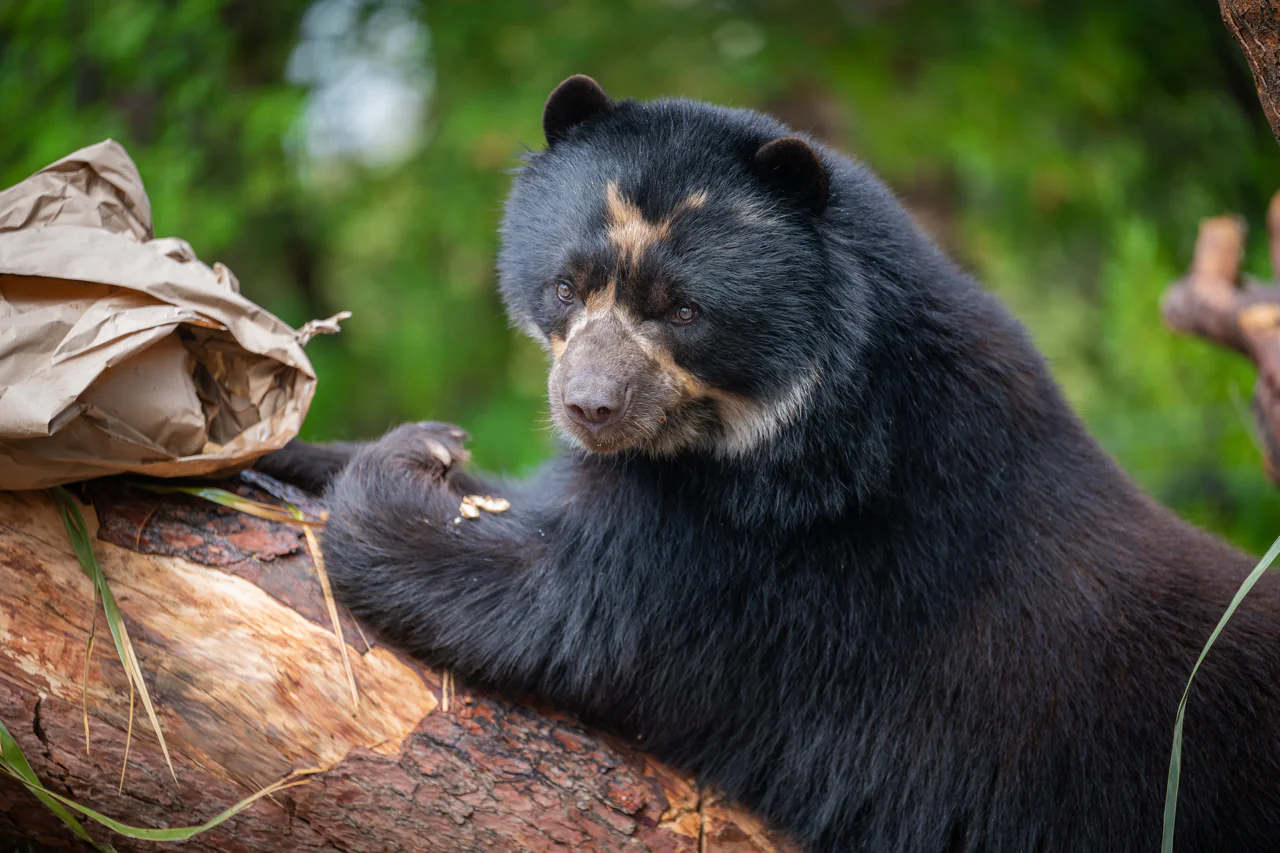
Also known as the spectacled bear due to the light-colored rings often framing their eyes, Andean bears inhabit forests along the Andes Mountains, ranging from Venezuela all the way down to Bolivia. Built for high-altitude forest life, Andean bears have long, curved claws that make them natural climbers. They spend much of their time in trees where they forage for food and build leafy sleeping nests.
Seed Spreaders and Forest Keepers
These fascinating animals hold vital importance across their native ecosystem as a keystone species. As omnivores with a predominantly vegetarian diet, Andean bears play an essential role in seed dispersal and ecosystem health across South America’s cloud forests.
Since their mountain habitats offer a steady, year-round food supply, Andean bears are active during the day (diurnal) and do not need to hibernate. They typically live into their early 20s in the wild and between 20 to 30 years in human care, with the oldest recorded bear reaching 39 years old.
Meet Auggie at the Phoenix Zoo
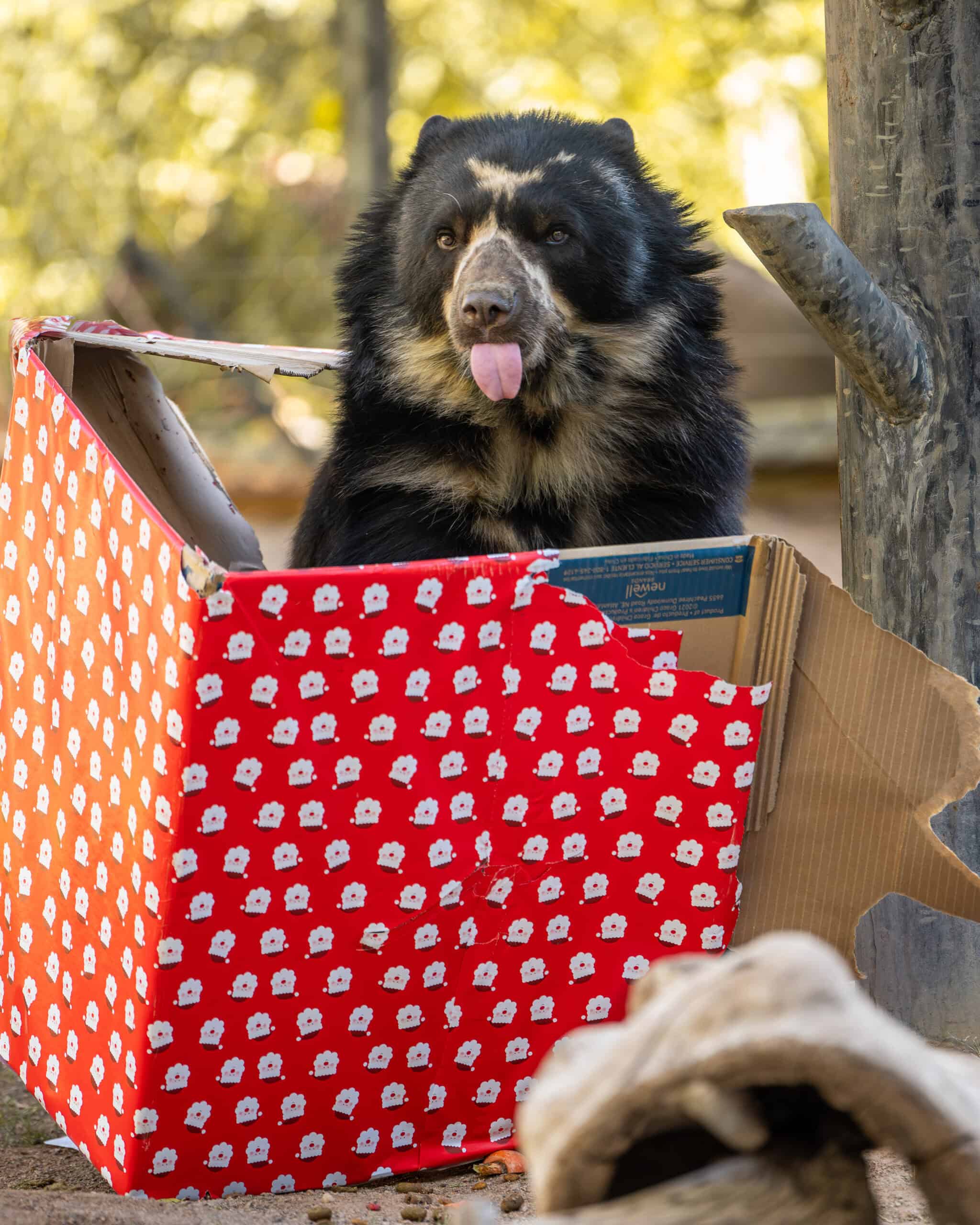
At the Phoenix Zoo, you can visit our resident male Andean bear, Agapito, affectionately known as Auggie. Born in 2020, Auggie arrived in Phoenix from the San Diego Zoo and currently weighs around 286 lbs.
While Auggie eats a well-rounded diet including meats, rabbit and trout (his favorite whole-prey treat), his absolute favorite snacks are avocados and jicama. Twice a week, he gets special bones that he loves carrying up into his favorite trees or hammock beds.
Curious and Creative
Auggie is extremely curious! He loves exploring new items and scents in his habitat, especially cherry extract, his favorite scent. True to his natural instincts, Auggie loves digging in the ground to search for insects and breaking branches in trees and bamboo thickets to build the ultimate comfy nest.
Protecting Andean Bears in the Wild
Classified as vulnerable by the International Union for Conservation of Nature, Andean bear populations face ongoing threats from habitat loss and fragmentation. The Phoenix Zoo actively supports conservation of this species through the Association of Zoos and Aquariums (AZA) SAFE Andean Bear Program. Working alongside the Colombian National Natural Park System, the Zoo also works to restore the Andean bear’s critical forest habitats and monitor ecosystem recovery over time.
See Auggie for Yourself
Head to the Zoo’s Forest of Uco during your next visit to see Auggie in action. As a hint, sometimes Auggie hangs out in the water at the front of his habitat’s main viewing spot near the Forest of Uco fountain, where he can be hard to see. But once you spot him, you’ll love him as much as we do.
¡Feliz Mes de la Herencia Hispana! Nuestra celebración de la vida silvestre de Latinoamérica nos lleva hasta los bosques de gran altitud de Sudamérica para conocer a la única especie de oso nativa del continente: el oso andino.
Un Habitante Icónico de los Bosques Sudamericanos
También conocido como oso de anteojos debido a los anillos de color claro que rodea sus ojos, el oso andino habita en los bosques de la cordillera de los Andes, desde Venezuela hasta Bolivia. Diseñado para la vida en altitudes grandes de los bosques, los osos andinos tienen garras largas y curvadas, que lo hacen excelentes trepadores. Ellos pasan la mayoría de su tiempo en los árboles, donde buscan alimento y construyen nidos de hojas para dormir.
Dispersores de Semillas y Guardianes del Bosque
Estos fascinantes animales tienen un papel muy importante en sus ecosistemas nativos, como una especie clave. Ellos son omnívoros, pero con una dieta predominantemente vegetariana, los osos andinos cumplen una función esencial en la dispersión de semillas y en el mantenimiento de la salud de los ecosistemas de los bosques nublados de Sudamérica.
Debido a que sus hábitats montañosos ofrecen una fuente constante de alimento durante todo el año, los osos andinos son diurnos, es decir, están activos durante el día, y no necesitan hibernar. Por lo general, viven hasta principios de sus 20 años en estado silvestre y entre 20 y 30 años bajo cuidado humano. El oso andino más longevo registrado llegó a vivir 39 años.
Conoce a Auggie en el Zoológico de Phoenix
En el Zoológico de Phoenix puedes visitar a nuestro oso andino, Agapito, cariñosamente conocido como Auggie. El nació en 2020 y llegó a Phoenix desde el Zoológico de San Diego. Actualmente pesa alrededor de 286 libras.
Aunque Auggie disfruta de una dieta balanceada que incluye carnes, conejo y trucha (su comida favorita), sus bocadillos favoritos son los aguacates y la jícama. Dos veces por semana también recibe huesos, que le encanta llevar a sus árboles favoritos o a sus hamacas.
Curioso y Creativo
¡Auggie es extremadamente curioso! Le encanta explorar nuevos objetos y aromas en su hábitat, especialmente el extracto de cereza, el cual es su aroma favorito.
Fiel a sus instintos naturales, a Auggie le encanta excavar en el suelo para buscar insectos y romper ramas de los árboles y de las matas de bambú para construir el nido más cómodo posible.
Protegiendo a los Osos Andinos en la Naturaleza
El oso andino está clasificado como vulnerable por la Unión Internacional para la Conservación de la Naturaleza (UICN). Las poblaciones de esta especie continúan enfrentando amenazas debido a la pérdida y fragmentación de su hábitat.
El Zoológico de Phoenix apoya activamente la conservación de esta especie a través del programa SAFE Andean Bear de la Asociación de Zoológicos y Acuarios (AZA).
En colaboración con el Sistema Nacional de Parques Naturales de Colombia, el Zoológico también trabaja para restaurar los bosques que son hábitat crítico para los osos andinos y monitorear la recuperación de estos ecosistemas a lo largo del tiempo.
Ven a Conocer a Auggie
Durante tu próxima visita, dirígete al Bosque de Uco (Forest of Uco) para ver a Auggie en acción.
Como dato útil, a veces Auggie pasa el tiempo en el agua, en la parte de adelante de su hábitat, cerca de la fuente donde puede ser difícil verlo. Pero una vez que lo encuentres, ¡lo querrás tanto como nosotros!
Recent Posts