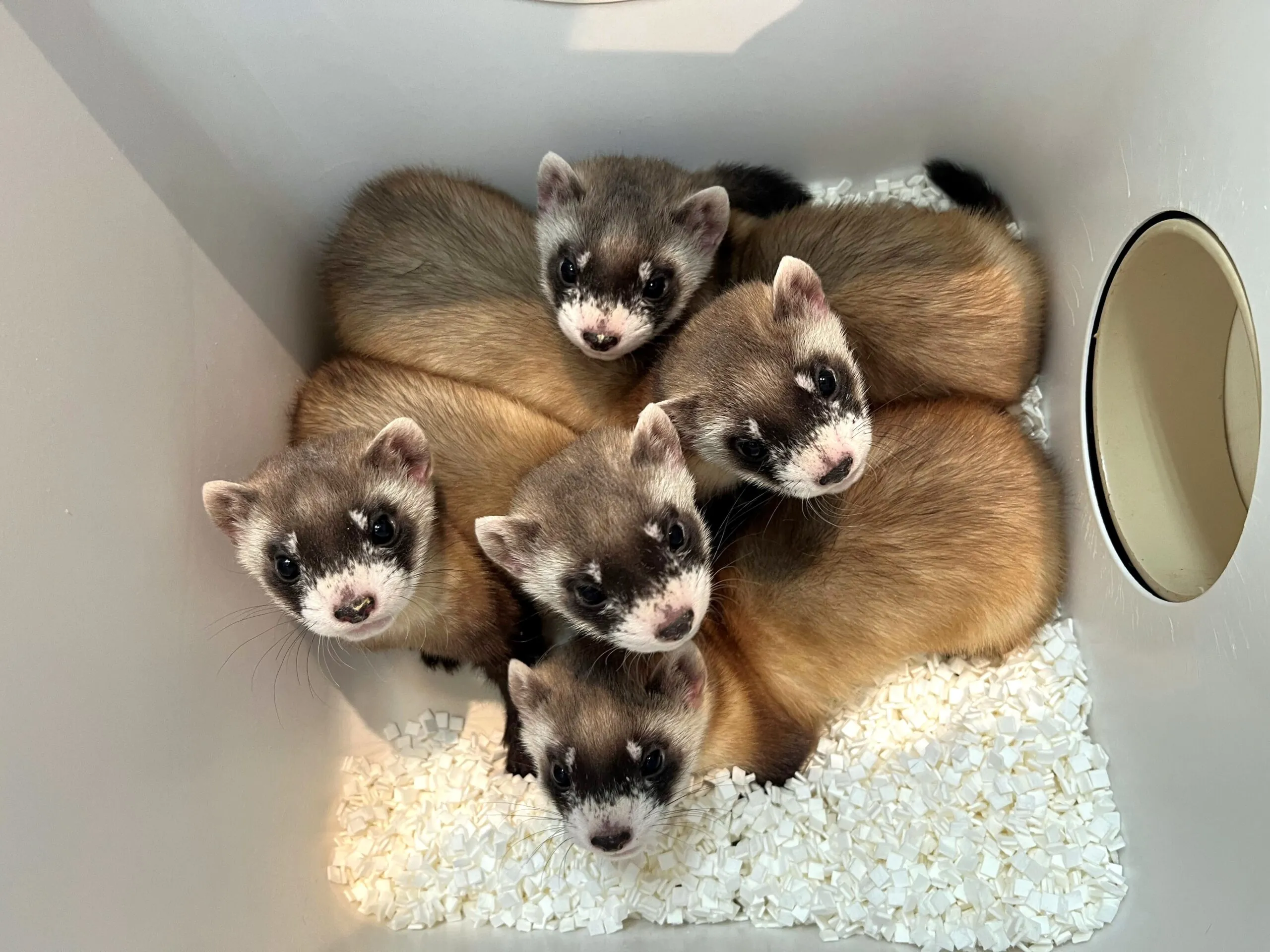
The Phoenix Zoo is involved in the conservation of several Arizona native mammals that have come close to extinction. The black-footed ferret and the Mount Graham red squirrel were once so scarce they were mistakenly thought to be extinct in the wild until isolated groups of them were later discovered. The Mexican wolf, another Arizona native, may have truly become extinct in the wild without intervention.
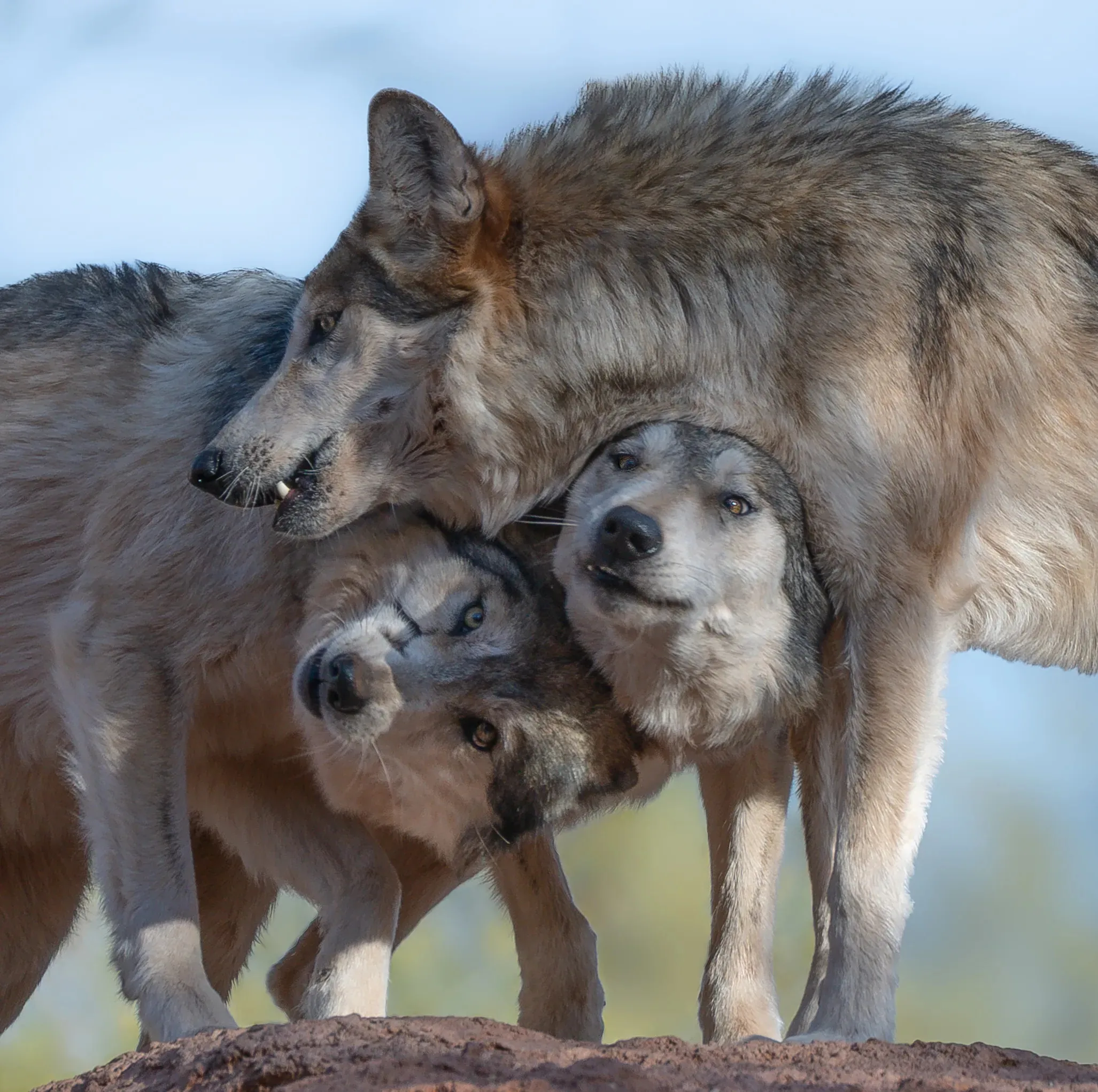
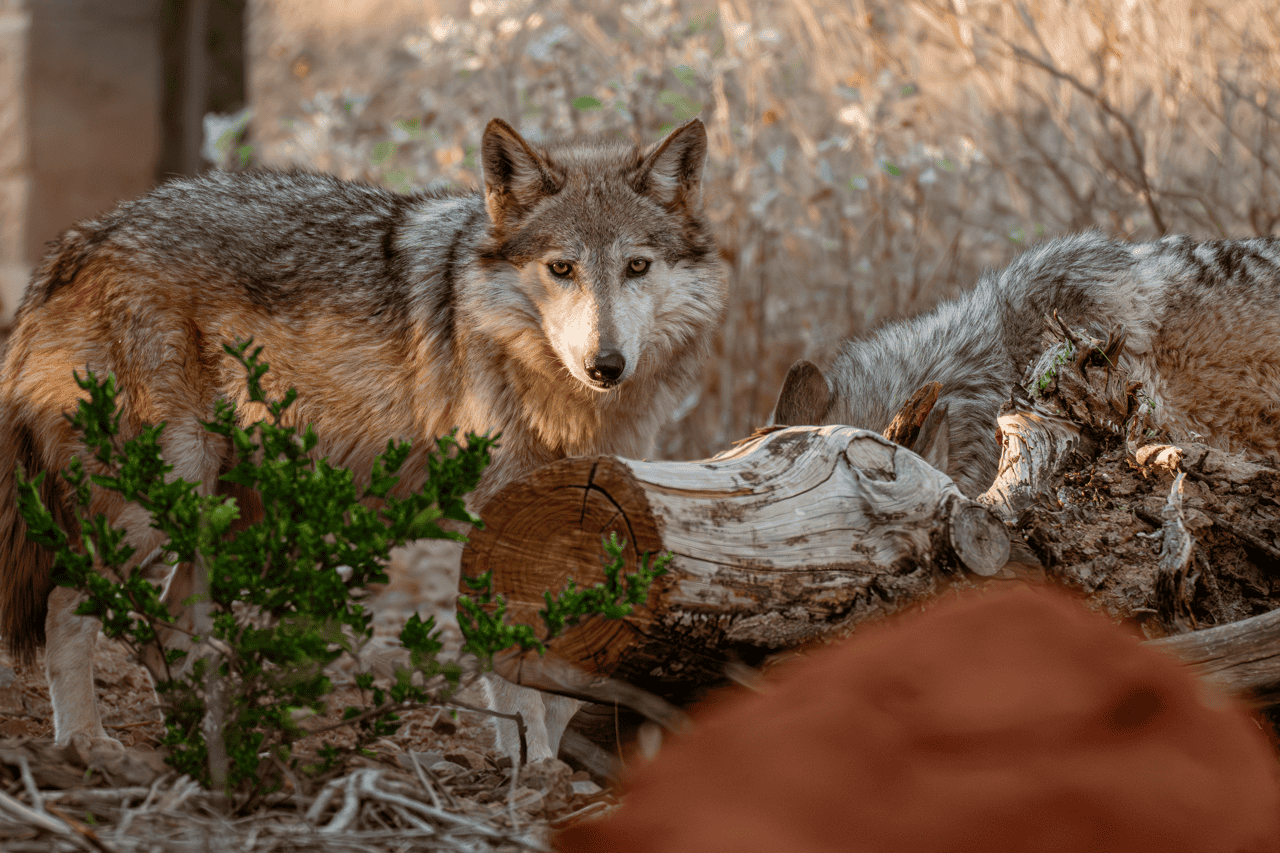
Mexican wolves are a subspecies of gray wolf in North America. They are so named because prior to their apparent extinction, the majority of their habitat was in the higher elevations of Mexico. Their range also extended into southern Arizona, southern New Mexico and western Texas. Mexican wolves (also referred to as lobos) have lived on this continent for several millennia. Centuries ago, they numbered in the thousands, but now they are the rarest type of gray wolf in North America.
During the early 1900s, populations of elk and deer (the major prey of gray wolves) were greatly reduced in the Southwest due to unregulated hunting by people. But cattle numbers were high, with Arizona and New Mexico each having more than 700,000 head. As a result, wolves in the Southwest increased their predation on cattle. With assistance from federal and local government agencies, efforts to eradicate these wolves ramped up. By the 1970s, the Mexican wolf had completely vanished in the U.S.
But there were other conservation trends in the 1970s. Ecology research and knowledge were becoming more mainstream, and the act of eliminating whole species or subspecies from ecosystems was starting to be considered a mistake. The Endangered Species Act was signed into law in 1973, and the Mexican wolf was added to its list of endangered animals in 1976. Consequently, the U.S. federal government became responsible for protecting and recovering the wolves in the wild. A Mexican wolf recovery program began to take shape.
In cooperation with Mexico, the U.S. sent expert wolf hunter/trapper Roy McBride to Mexico to capture lobos and bring them back alive to the U.S. At this time, lobos in Mexico were also protected by law, but many had already been lost due to extirpation efforts, so they were few and far between. Between 1977 and 1980, McBride was only able to retrieve five Mexican wolves. These five were brought to the Arizona-Sonora Desert Museum in Tucson, Arizona. In 1980 McBride stated there was probably “less than 50” lobos still in Mexico. Jose Treviño, Mexico’s director general of wildlife, said in 1981 “perhaps 30” remained in Mexico. Nevertheless, no further captures were ever attempted, and most experts believe that Mexican wolves eventually became extinct in the wild.
The captive breeding of Mexican wolves faced many early challenges. Only one of the five wild-captured wolves was a female. Fortunately, Nina (as she was later named) was pregnant when captured and gave birth several weeks later to four male pups and one female pup. Unfortunately, the female pup passed away four days after birth, leaving Nina again as the only female. Among the captured males, one was too young to breed and two never did breed. Maximillian, the last captured male, thus became the last hope for a pairing and offspring with Nina. To improve the odds, both Nina and Maximillian were transferred to the Wild Canid Survival and Research Center in Missouri (today known as the Endangered Wolf Center), which had a larger and more secluded habitat. Success was achieved in 1981 when Nina whelped four pups, three of them female!
The McBride lineage has only three founders. They are Nina, Maximillian and the uncaptured wild father of Nina’s first litter born in captivity. To increase genetic diversity, more founders were needed. Two captive populations that had been around since the 1960s were the Ghost Ranch lineage maintained by the Arizona-Sonora Desert Museum, and the Aragón lineage kept by the San Juan de Aragón Zoo in Mexico City. Suspicions that the wolves from these two populations may be wolf-dog hybrids had prevented them from being considered as a source for founders. But genetic research conducted by Arizona State University professor Philip Hedrick and colleagues in 1995 concluded that they were full-blooded Mexican wolves. As a result, one male and one female were taken from each of these two populations to become four new founders. Along with the McBride lineage’s founders, these are the seven founders from which all of today’s Mexican wolves are descended.